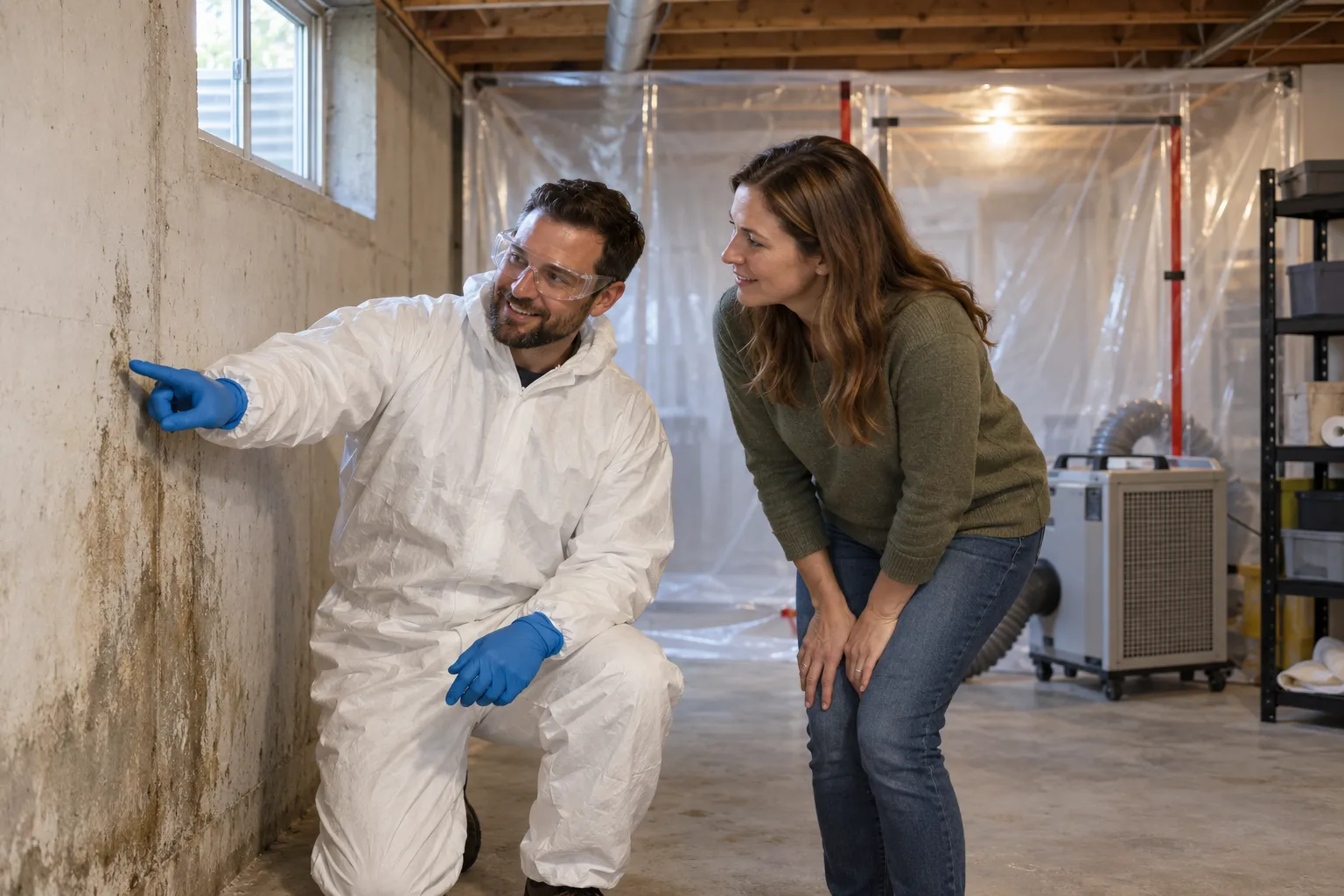
Mold Remediation for Your Home
Request an estimate today
Found fuzzy spots on a wall, a musty smell in the basement, or dark patches on a ceiling? You are not alone, and it is fixable. Mold remediation is the full process of removing mold and dealing with the damp that fed it. Independent providers in our network do that work. Localfield Mold Help simply helps you reach them.
Small, surface-level spots on hard materials are sometimes a safe DIY job. Bigger patches, hidden growth, and mold in soft materials usually call for professional equipment. If you are not sure which one you have, start by requesting an estimate. A local provider can look at the problem, explain your options, and give you a written quote. There is no obligation to hire anyone.
Found Mold? Here's Where to Start
You spotted something dark and fuzzy. Now what? Take a breath. Most mold problems are very fixable when you act with a plan.
Start with moisture. Mold needs water to grow, so look for the wet spot first. Check for leaks, damp drywall, and window drips. Then keep kids, pets, and anyone with breathing trouble away from the area while you sort it out.
Can I Clean It Myself?
Sometimes, yes. A small patch on a hard, non-porous surface, like a tile or a sealed window frame, can often be wiped down. Wear gloves, a snug mask, and eye protection. Keep the area ventilated and do not scrub dry, dusty growth, because that can spread spores.
A good rule of thumb is size and surface. If the spot is small, the surface is hard, and the cause is already fixed, DIY may be reasonable.
When Is It Time to Bring in a Provider?
Leave it to a pro when the mold covers a large area, keeps coming back, or sits in drywall, insulation, carpet, or wood. The same goes for mold near the HVAC system, after a flood, or when someone in the home has asthma or allergies.
If you are searching for mold inspection near me, that is a smart first move. An inspector can find hidden growth that your eyes cannot. Many providers also offer certified mold testing, so ask what credentials the provider holds.
Why Does Mold Get Worse Over Time?
Mold does not stay still. Spores land on damp material, settle in, and spread. In older frame houses, growth can creep into wall cavities and under floors where you cannot see it.
That is why a quick check matters. A small problem is simpler to treat than a big one, and it often costs less too. Hot, humid summers and spring flooding give mold plenty of chances to grow.
What Does Mold Remediation Include?
Residential mold removal is more than a scrub. A typical job has several steps:
- Inspection and testing to find the source and the spread
- Containment to keep spores from drifting
- Air filtration with HEPA equipment
- Removal of mold and damaged materials
- Cleaning and drying of what can be saved
- A final check that the area is ready for repairs
Providers vary in how they run each step, so ask for the plan in writing.
Why Does Containment Matter?
Here is the part DIY often misses. Disturbing mold sends spores into the air. Without barriers, they can settle in rooms that were clean before.
Providers use plastic sheeting, sealed doorways, and negative air machines. These tools pull air out through filters instead of letting it drift through the house. That is hard to copy with a box fan and a bedsheet.
How Do You Fix the Moisture Source?
Removing mold without fixing the water is like mopping with the tap running. The mold will return.
Common causes include roof leaks after hail, plumbing drips, poor bathroom venting, and damp basements. Cold winters can add condensation on cold walls. A good provider will point out the source, even if a plumber or roofer has to do the repair itself.
Does Insurance Help With Mold?
It depends on your policy. Some policies may cover mold that follows sudden damage, like a burst pipe. Slow leaks and neglected upkeep are often treated differently. Check your policy or ask your agent before the work starts.
Providers can often help document damage with photos and notes for a claim. That paperwork can make the conversation easier.
How Do I Choose a Remediation Provider?
Good questions make the choice simple. Ask these:
- Will you give me a written quote?
- What does the plan say about containment?
- Do you test before and after?
- How do you handle the moisture source?
- Who does the work, and who is licensed locally?
If an answer feels vague, keep looking. Comparing a couple of estimates is a wise habit.
What Happens After the Work Is Done?
Once the area passes its final check, repairs can begin. That might mean new drywall, paint, or flooring. Wait until the space is fully dry before you close anything up.
If you have a full basement, test your sump pump now. Make sure the discharge line sends water well away from the foundation.
Fix It, Then Keep It Dry
Prevention is the easy part when you build a few habits. Keep indoor humidity under about 50 percent with a dehumidifier. Run bath and kitchen fans. Clean gutters and check the roof after a big storm. Look at corners, closets, and basement walls every season.
Ready for a clear plan? Request an estimate and compare your options with no obligation.
What's Included
Inspection and Testing
A provider checks for hidden growth, finds the moisture source, and may take samples to confirm what is there.
Containment and Filtration
Barriers and HEPA air machines help keep spores from drifting into clean rooms during the work.
Safe Removal
Mold and ruined materials are removed and bagged with care.
Cleaning and Drying
Surfaces that can be saved are cleaned, then dried so the space is ready for repair.
What Mold Remediation Typically Costs
Prices vary a lot by home size, mold spread, and materials involved. These are typical U.S. ranges only. Always ask for a written quote from each provider so you can compare the scope and the price.
| Item | Typical range | Notes |
|---|---|---|
| Mold inspection | $300 – $1,000 | Larger homes cost more |
| Lab testing | $50 – $150 per sample | Often added to an inspection |
| Small area cleanup | $500 – $1,500 | Single room, limited spread |
| Whole-room remediation | $1,500 – $4,000 | Includes containment and removal |
| Basement or crawl space | $2,000 – $6,000 | Depends on moisture and access |
| Large or hidden growth | $5,000 – $15,000+ | Walls, HVAC, or structural parts |
How It Works
Spot the Signs
Note musty smells, stains, or damp areas. Take photos and keep family away from the area.
Request an Estimate
Tell us about the problem, and a local provider can reach out to you.
Review the Plan
Compare the written scope, testing, and containment steps from the provider.
Keep It Dry
After the work, manage humidity and fix leaks quickly.
Why Call Localfield Mold Help
Clear Guidance
Get plain answers about what you can handle yourself and when a provider is the safer choice.
Local Providers
Independent providers in our network know the local climate, basements, and older homes.
Compare Quotes
Request an estimate, review the written scope, and decide at your own pace.
No Obligation
Asking questions never locks you into a job.
Other Services
Need mold remediation in Detroit?
Questions about mold in your home? Send a request through the form or email contact@localfield.garden. There is no obligation, and a local provider can follow up.
No obligationMold Remediation FAQ
Can I remove mold myself?
Small patches on hard surfaces can sometimes be cleaned with gloves, a mask, and good ventilation. Larger areas, soft materials like drywall, or repeat growth are better left to a provider with proper equipment.
How do I know if I need mold testing?
If you smell mold but cannot see it, or growth keeps returning, testing can help locate it. Ask providers about certified mold testing and whether they test again after the work is finished.
Will mold come back after remediation?
It can if the moisture problem is not fixed. Repair leaks, run fans, keep humidity low, and check damp spots each season. A provider can also suggest changes that fit your home.
Request a callback
Questions about mold in your home? Send a request through the form or email contact@localfield.garden. There is no obligation, and a local provider can follow up.
No obligation