Mold Questions Homeowners Ask Most
Request an estimate when you're ready
Questions and answers
Can I clean mold myself?
Sometimes, yes. Small spots on hard, non-porous surfaces like tile or glass are often fine to wipe with detergent and water. Wear gloves, a mask and eye protection. Stop if the patch is bigger than a few square feet, keeps coming back, or sits on drywall, wood or insulation. That is when a local provider should take a look.
How do I know if it's black mold?
You can't tell by color alone. Many molds look dark green or black. Only testing can show what type you have. Treat any dark, fuzzy or slimy growth with care. Avoid touching it or stirring it up. A provider in our network can inspect the area and explain whether testing makes sense.
When should I stop DIY and call a pro?
Stop when the problem is larger than you can easily reach or when it returns after cleaning. Also stop if you smell mustiness but see nothing, or if water caused it. Hidden moisture inside walls needs special tools. Request a callback to check provider availability, or send an estimate request.
What does a mold inspection involve?
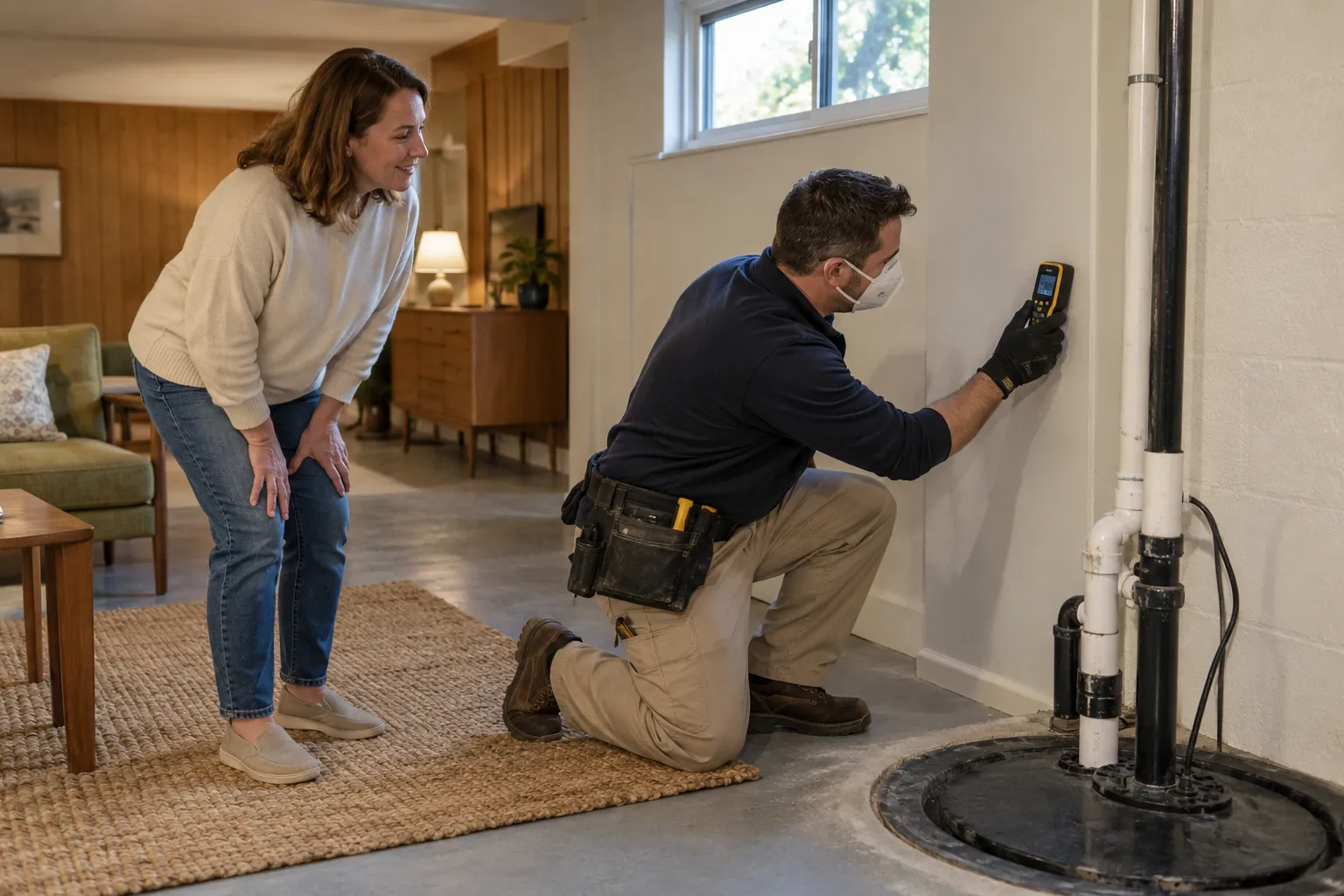
An inspector looks over your home for visible growth, musty spots and moisture sources. They may use a moisture meter or a thermal camera. Some visits include air or surface samples sent to a lab. You then get findings and next steps, ideally in writing. Ask the provider what is included before the visit.
Is certified mold testing worth it?
It can be, especially when you smell mold but can't find it, or when someone in the home has symptoms. Testing shows where spores are and what kinds are present. If you plan to hire a remediation provider, ask about independent testing before and after the work. Costs vary, so get a written quote.
How long does mold removal take?
It depends on the size and the materials involved. A small area may take a day or two. Larger jobs with removed drywall, drying equipment and repairs can take several days or more. The provider should give you a timeline after seeing the space. Weather, such as spring flooding, can also affect scheduling.
Is it safe to stay home during removal?
Often yes, if the provider seals off the work area and uses air filtration. For larger jobs or if anyone has asthma, allergies or a weak immune system, ask about staying elsewhere for a bit. Always follow the provider's advice about which rooms to avoid.
How do I keep mold from coming back?
Fix the moisture first. Repair leaks, check sump pumps, and keep gutters clear so water moves away from your foundation. Run a dehumidifier in damp basements during humid summers. Aim for indoor humidity under about 50 percent. Fix it, then keep it dry. Ask your provider for a few simple upkeep tips.
Request a callback
Questions about mold in your home? Send a request through the form or email contact@localfield.garden. There is no obligation, and a local provider can follow up.
No obligation