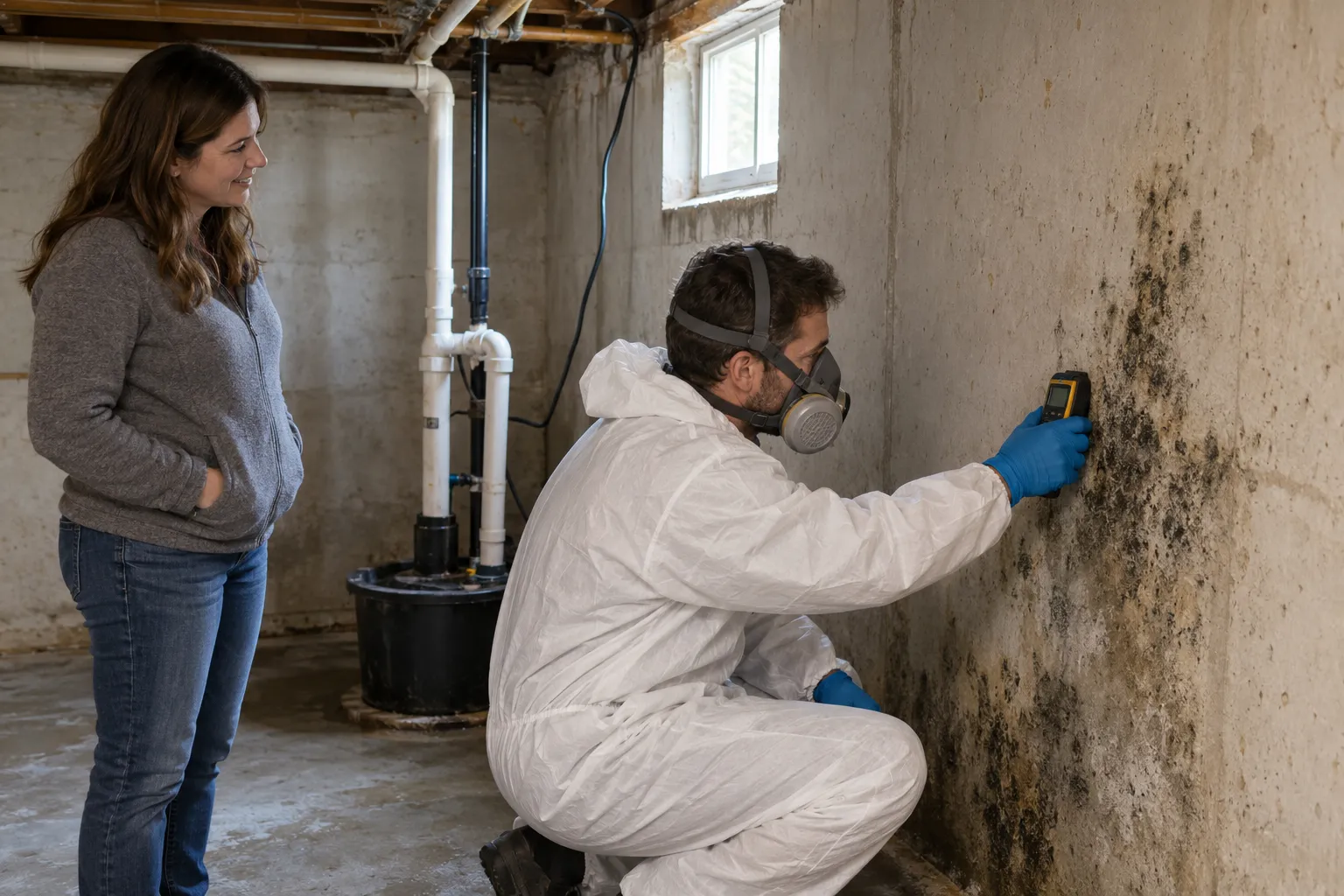
Black Mold Removal Services for Your Home
Request an Estimate
A dark, fuzzy patch on a wall can make your stomach drop. The good news is that you have options. Many homeowners start by asking what they can safely do, and what needs a pro. This page walks you through that choice in plain words.
Localfield Mold Help is a referral service. It connects homeowners in the Detroit area with independent local providers who inspect, test, and remove black mold. The providers do the work, not Localfield Mold Help. You can request an estimate with no obligation, compare what you hear back from each provider, and pick the next step that feels right for your home and your budget.
Found Black Mold? Here Is Where to Start
Take a breath. You have clear next steps. First, keep kids, pets, and anyone with breathing trouble out of the room. Close the door if you can.
Do not scrub it, sand it, or aim a fan at it. That can toss spores into the rest of the house. Instead, take photos and jot down when you first saw it. Note any leaks, floods, or musty smells too. A provider will want those details.
Is It Really Black Mold?
Good question. Plenty of dark spots are dirt, soot, or old stains. And many molds look black or deep green. You cannot tell by eye alone.
If you have typed mold inspection near me into a search bar, this is why. A local provider can check the moisture, see how far the mold spread, and take samples. Ask if the provider offers certified mold testing, so the results are easy to trust and explain.
Where Does Black Mold Like to Hide?
It loves damp, dark spots with little airflow. Think about these places:
- Basement walls and floors near a sump pit
- Behind drywall after a pipe leak
- Under sinks and around tubs
- Attic roof decking after a hail or storm leak
- Crawl spaces and closets on outside walls
Spring flooding and sticky summers make these spots worse. Cold winters add trouble too. Warm indoor air can leave moisture on cold walls and windows.
Can You Handle It Yourself?
Sometimes you can help. Often the main work should go to a pro. Here is a simple way to sort it out.
Safe DIY
A small patch on a hard surface, like tile or a sealed shower wall, may be fine for careful cleaning. Wear gloves, goggles, and a fitted N95 mask. Use detergent and water, and keep the air moving outdoors. You can also dry the room, fix a dripping faucet, and clear items out of the way.
Smart Pro
Bring in a provider when the mold covers a large area. Do the same when it sits on drywall, wood, or insulation, or when it came back after cleaning. Also call one if the water was dirty, if the HVAC system is involved, or if someone at home has asthma or a weak immune system. Pros use containment barriers, air scrubbers, and proper protective gear. Those tools are hard to match at home.
Why Isn't Bleach Enough?
It seems like it should work. But bleach mostly lightens the stain on the surface. Porous materials like drywall and wood soak up the liquid, and the mold roots go deeper. The patch can return in a few weeks. Bleach also gives off harsh fumes.
Real removal means cleaning or taking out the affected material the right way. It is not just about changing the color.
How Does Black Mold Removal Work?
Every job is a bit different, but most follow the same path:
- Inspect and test. The provider finds the moisture and the full spread.
- Contain. Plastic barriers and negative air pressure keep spores from drifting.
- Remove. Badly hit drywall, carpet, or insulation is cut out and bagged. Solid framing is cleaned with HEPA vacuums and scrubbing.
- Clean the air. HEPA air scrubbers filter the room.
- Check. Many providers offer a follow-up test to confirm the work.
That is what careful residential mold removal looks like. Black mold remediation is a process, not a single spray.
What About the Cause?
Here is the big one. Mold needs moisture. If the leak stays, the mold returns. So the source has to be found and fixed. It might be a tired sump pump, a cracked foundation wall, a clogged gutter, or a roof hit by hail.
Fix the source first. Then dry the space fully before anything is rebuilt. A plumber or roofer may be needed for that part.
What Happens to My Belongings?
Hard items like glass, metal, and plastic can usually be wiped and cleaned. Soft items such as couches, mattresses, and stuffed toys are harder. Some can be cleaned by a pro. Some are better replaced. Paper and cardboard often need to go.
Keep a list and photos. Providers can often help document damage for a claim. Some policies may cover sudden damage, so check your policy.
How Do You Keep It From Coming Back?
Fix it, then keep it dry. Start with moisture. A few habits go a long way:
- Keep indoor humidity under about 50 percent with a dehumidifier
- Test your sump pump each spring and before big storms
- Clean gutters and aim downspouts away from the house
- Run bath and kitchen fans
- Check under sinks and near the water heater each month
- Peek at the attic after hail
Want to talk it through with someone? Request a callback to check provider availability.
What Should You Ask the Provider?
Good questions lead to a good job. Try these:
- Will you test before and after the work?
- How will you contain the area?
- What caused the mold, and how will that be handled?
- Is the quote in writing, with a clear scope?
- Is there a written warranty on the work?
- Are you licensed and insured in my state?
You do not have to decide today. Request an estimate, compare your options, and move forward when you feel ready.
What's Included
Mold Inspection and Testing
A provider checks moisture, maps the spread, and takes samples when needed.
Containment and Removal
Barriers and negative air keep spores in place while damaged material is safely cut out.
HEPA Cleaning
Special vacuums and air scrubbers pull fine dust and spores from the space.
Moisture Source Advice
Providers point out leaks and damp spots so the mold does not return.
What Does Black Mold Removal Cost?
Costs vary a lot by size, materials, and access. These are typical U.S. ranges, not quotes. Always get a written estimate that spells out the work before you agree to anything.
| Item | Typical range | Notes |
|---|---|---|
| Inspection and sample testing | $300 – $1,000 | Depends on the number of samples and lab fees |
| Small area (under 10 sq ft) | $500 – $1,500 | Often on one wall or ceiling spot |
| Single room | $1,500 – $4,000 | Higher if drywall and insulation must come out |
| Basement or crawl space | $2,000 – $6,000 | Size and moisture level change the price |
| Attic or large multi-room job | $4,000 – $15,000 | Roof access and wide spread add cost |
| Follow-up clearance test | $200 – $600 | Confirms the work after removal |
How It Works
Stay Clear
Keep people and pets out of the room, leave the mold alone, and take photos for later.
Request an Estimate
Tell us what you see, and a local provider can reach out to you.
Inspection and Plan
The provider checks moisture, may test, and explains the scope in writing.
Removal and Dry-Out
Damaged material is removed, the air is cleaned, and the area is fully dried.
Why Call Localfield Mold Help
Plain Answers First
Get simple guidance on what to do yourself and what to leave to a pro.
Local Providers
Independent providers in our network know the damp basements and humid summers around here.
Estimate First
Request an estimate with no obligation and compare before you decide on anything.
Prevention Focus
Ask about drying, sump pump checks, and humidity habits to help keep mold away.
Other Services
Need black mold removal services in Detroit?
Questions about mold in your home? Send a request through the form or email contact@localfield.garden. There is no obligation, and a local provider can follow up.
No obligationBlack Mold Removal Services FAQ
Is black mold dangerous?
Some people react to mold with coughing, sneezing, or irritated eyes. Those with asthma, allergies, or weak immune systems may feel it more. Limit contact, keep the area closed off, and ask a local provider about testing and next steps.
Can I remove black mold myself?
A small patch on a hard, sealed surface may be a careful DIY job with gloves, goggles, and an N95 mask. Larger areas, drywall, wood, or repeat growth are safer left to a provider with proper containment.
Does homeowners insurance cover mold removal?
Some policies may cover mold from sudden damage, like a burst pipe, but not from long-term leaks. Check your policy and ask your agent. Providers can often help document the damage for a claim.
Request a callback
Questions about mold in your home? Send a request through the form or email contact@localfield.garden. There is no obligation, and a local provider can follow up.
No obligation